Why Gliders Deflect Flaps Up When Flying Fast
Wings and “Drag Buckets”
When a wing is flying, there’s a point on the front where all the air hits the surface and just stops. All the air above that point goes over the top, and all the air below goes over the bottom, and an area around this stagnation point where the air is pretty much stopped. One of the largest components of drag on a wing is the pressure on the front around that stagnation point, so the smaller you can make that area, the lower the drag.
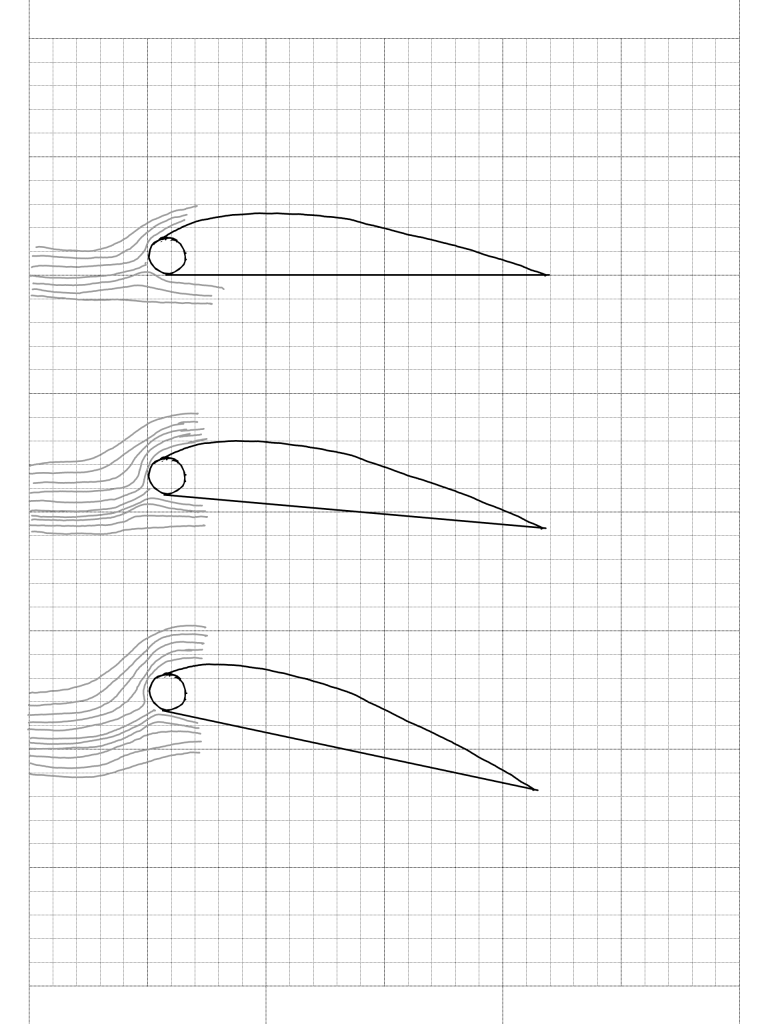
The size of that stagnation area is mostly a function of the radius of curvature, so, as long as the stagnation point stays on the leading edge, a smaller leading edge radius has less drag. The tradeoff is that, as the angle of attack changes, the stagnation point moves around. If the leading edge radius is too small, the stagnation point can move off the leading edge. At that point, the drag is higher than if the wing just had a larger leading edge radius to begin with.
This leads to the idea of a “drag bucket”, or an angle of attack range where the wing is most efficient. The smaller the leading edge radius, the more efficient it is in that range, but the narrower the range. That leads to engineering choices and trade-offs for how deep you can get the bucket without making things worse instead.
Negative Flaps for a deeper drag bucket
Most planes control their lift during cruise flight by changing their angle of attack. That requires a relatively wide and shallow drag bucket so that the plane stays efficient at that wider range of angles of attack. For gliders, on the other hand, which pursue lift to drag ratio at almost any cost, that’s not good enough.
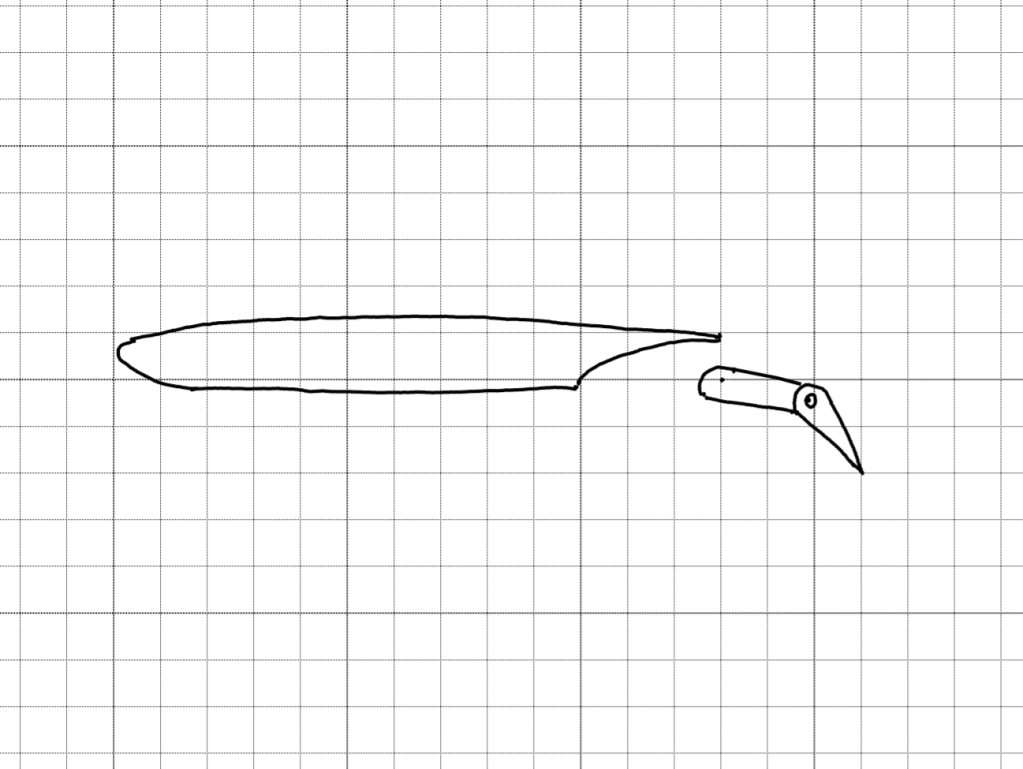
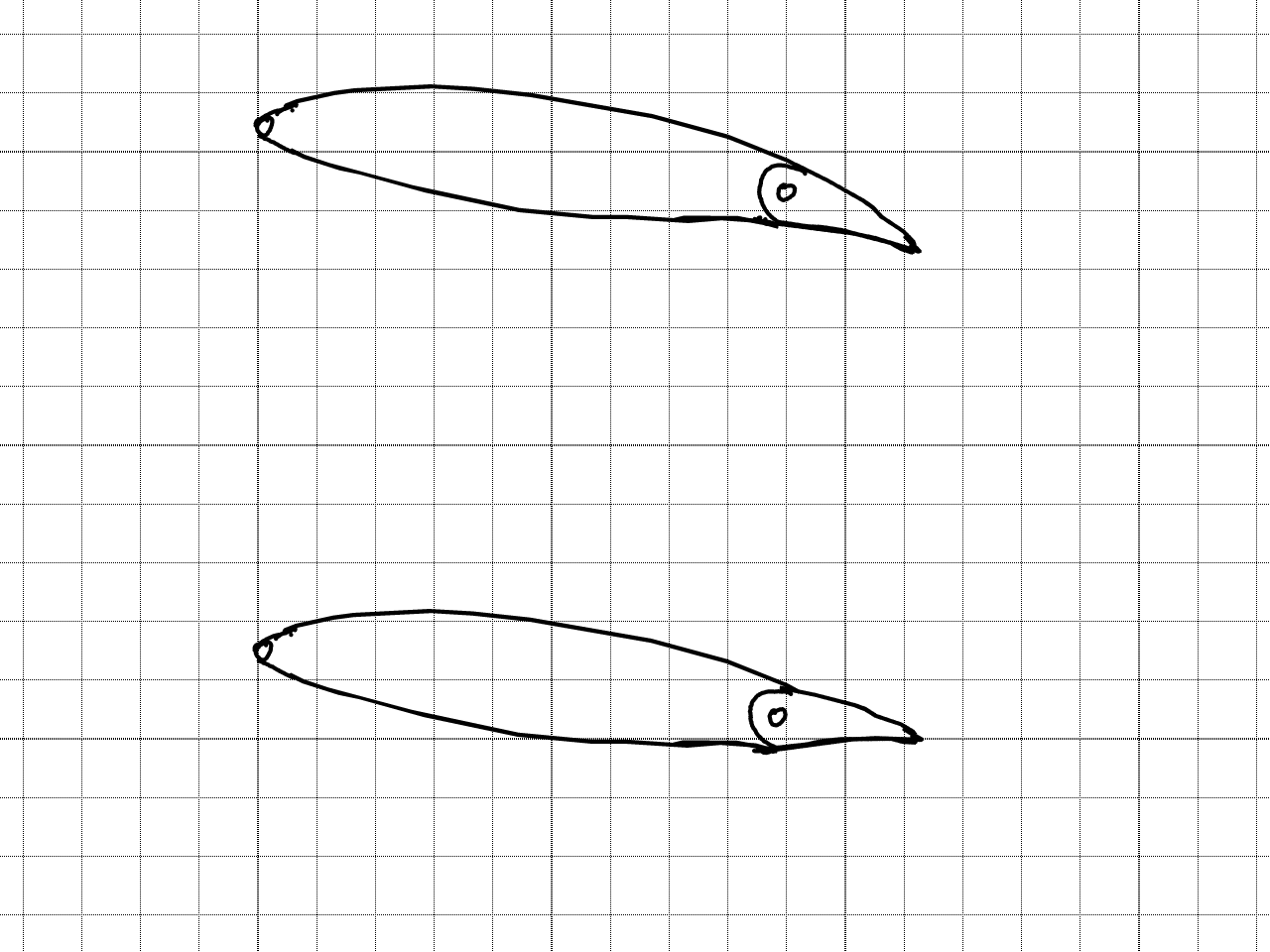
When a glider is flying faster, it deflects its flaps upwards to reduce the lift from the wings without having to pitch down. That keeps the wing in a narrower angle of attack range over the range of cruising speeds, so that it can be designed with a narrower and deeper drag bucket. That translates to a significantly higher lift-to-drag ratio during cruise.
Why Most Planes Don’t
Takeoff Speed vs Cruise Speed
Most commercial aircraft fly much faster than gliders, with even the small piston engine aircraft in charter service cruising at 200 kts, twice the fastest cruising speed of most gliders. The faster the cruising speed, the smaller you want the wings to be for cruising efficiency. For the smaller wings that are efficient at those higher speeds, you need much more lift augmentation to fly slow enough for takeoff and landing. The simple flaps gliders use that can have negative deflection don’t give much lift augmentation, and the larger wings that would require would cancel out the efficiency gains from using negative flap deflections.
Fowler Flaps for High Lift
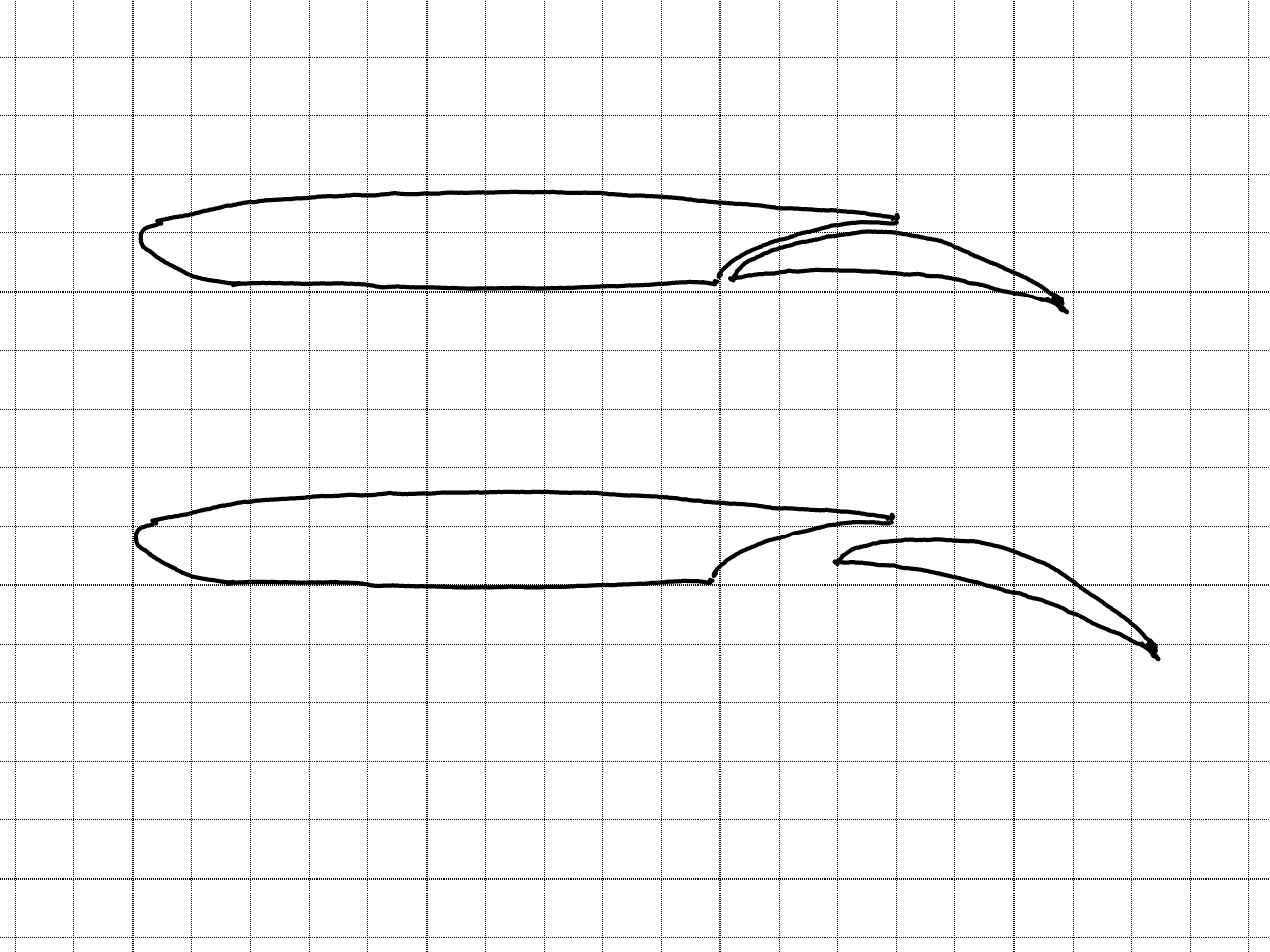
Instead, most airliners use Fowler flaps to generate as much lift as possible for takeoff and landing. Fowler flaps both extend to make the wing larger, and open a slot to dramatically amplify the lift augmentation of deflecting the flaps down. That allows a given size wing to produce 2-3x the lift with teflaps deployed compared to the plain flaps gliders use. Many airliners have complex Fowler flaps with 2 or 3 slots to make them even more powerful. The downside is that, because of the complex extension mechanism and how the flaps are stored, they can’t be deflected at all during cruise.
Why not both?
The obvious question is, why not have both types of flaps? You obviously need the Fowler flaps to cover most of the wing span, like usual, or it would defeat the purpose. That means we’d be looking at turning the back of a Fowler flap into a plain flap, which I would call a nested flap. Airliners almost universally use high-pressure hydraulics to move the flaps because it’s been the lightest and most efficient solution for decades. Unfortunately, high-pressure hydraulic lines are not very flexible, so running one into the Fowler flap, with its complex motion, to move a plain flap on the back, is almost impossible.
How Electric Actuators Could Bring it to Airliners
Electric vs Hydraulic
As demonstrated in newer fighter aircraft like the F-35 and commercially in the 787, electric actuators are starting to mature for use in aviation. Hydraulic systems have been used for a long time because they generate a lot of compact power with a much smaller motor to drive the pump. The downside is that they’re a bit messy and maintenance-heavy because they leak. Electrical systems, on the other hand, require much less maintenance, but until recently were much heavier. Recent developments in higher power density and higher voltage electric motors can make electrical systems lighter than legacy hydraulics, which is why they’re starting to show up in aircraft. Relevant to nested flaps, those high-voltage cables are not only lighter than hydraulic lines, but also much more flexible. That makes getting power into a Fowler flap for a nested plain flap much more practical.
Getting the Best of Both
Using electric actuators to build a “nested flap” that combines a Fowler flap and a plain flap can have high lift augmentation and a deep and narrow drag bucket. The Fowler flap’s extension gives the extreme lift augmentation needed for takeoff and landing, while the plain flap at the trailing edge gives fine control of the lift coefficient. Having the plain flap also allows you to significantly reduce the Fowler flap’s maximum deflection, mitigating the additional complexity of a nested flap.
Because the integral plain flap can deflect in both directions, it can replace the ailerons, allowing the flaps to run the full span of the wing. That lets you get even more lift and a more efficient lift distribution with the flaps extended, allowing a smaller wing and smaller engines that are more efficient in cruise.
Efficiency Gains
The direct efficiency gains of nested flaps come in two forms. One is that the aircraft would no longer need separate ailerons. Then the flaps could be full span, allowing for a smaller wing with less weight and less skin friction. The other is that it would allow for a very broad range of lift coefficients at a fixed angle of attack. That allows even a jet airliner to use a wing with a narrower and deeper drag bucket. Comparing motor gliders to the most efficient conventional propeller planes, I think a 10-30% reduction in fuel burn is possible.
Nested flaps not only allow full span flaps and more control over the total lift, but also give more control over the lift distribution. By controlling how far outboard on the wings the lift is generated, you can reduce the peak bending loads on the wing root, making the whole plane lighter. The most efficient lift distribution for a given bending load is a bell span load, with the wingtips producing little or even negative lift. The problem is, most airliners have their wingspan limited by ground handling, and you need a slightly heavier elliptical span load, which is the most efficient way to maximize lift from a given wing span. The bending load also depends on the aircraft’s G loading, so if you can control your lift distribution, you can change between a bell span load with a higher G limit and an elliptical span load with a lower G limit. When Fowler flaps are deployed, the G limits are determined by the flaps instead of the wing root. That means that for a bell span load wing with full span nested flaps, it can switch to an elliptical span load to maximize lift when the flaps are deployed without adding weight or reducing the G limit in cruise.
Electric actuators have the potential to unlock a paradigm change in wing design that could reduce fuel burn by >20%. That’s enough to match, or even significantly exceed, the fuel savings of introducing carbon fiber structures.
 Matthew's Eclectic Engineering
Leave a comment